

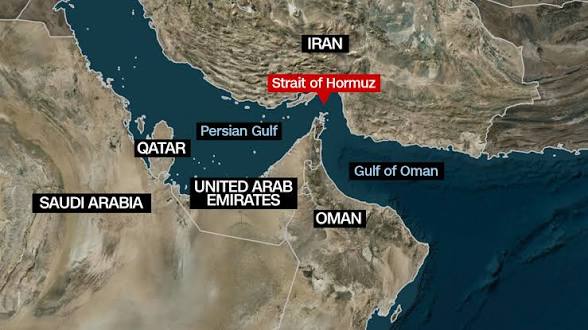
What is the Strait of Hormuz?
The Strait of Hormuz is not just a stretch of water. It is a narrow maritime corridor that quietly dictates the rhythm of the global economy.
Sitting between Iran and Oman, it connects the Persian Gulf to the Gulf of Oman and, by extension, the wider Arabian Sea and international waters.
At its narrowest point, it is barely 33 kilometres wide, with shipping lanes so tight that a single disruption can ripple across continents.
But geography alone does not make it powerful. Its significance lies in what passes through it. Roughly one fifth of the world’s oil supply flows daily through this channel, alongside a significant share of global liquefied natural gas.
In more precise terms, over 20 million barrels of crude and petroleum products move through it every day, making it arguably the most important energy chokepoint on earth.
This is where the story deepens.
The Strait is not merely a passage. It is a lifeline. Nations like Saudi Arabia, Iraq, Kuwait, Qatar, and the United Arab Emirates depend on it to export energy.
On the other end, economies such as China, India, Japan, and South Korea rely heavily on what flows through it to power industries, cities, and entire national systems.
So when tension rises in that narrow corridor, the world does not just watch. It reacts. Prices rise. Markets tremble. Governments respond behind careful diplomatic language.
Iran’s Strategic Leverage
To understand the current crisis, one must understand proximity. Iran sits along the northern edge of the Strait, giving it a geographical advantage that easily translates into strategic influence.
It does not need to own the Strait to affect it. Its location alone allows it to monitor, threaten, or disrupt traffic at will.
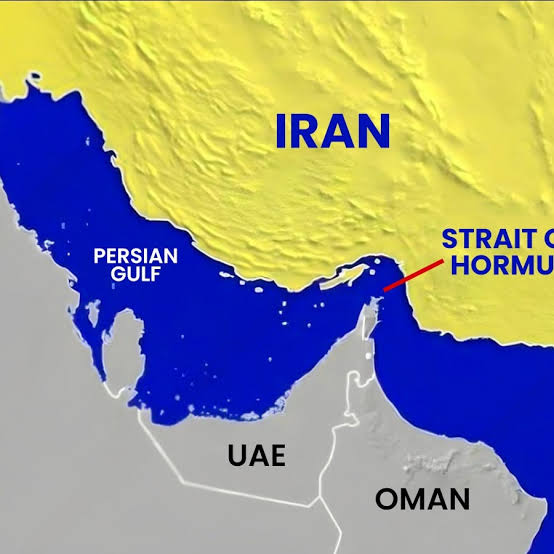
In recent developments, Iran has been accused of effectively restricting movement through the waterway, triggering fears of a de facto blockade.
Maritime traffic disruptions have raised alarm across global markets, with energy flows under pressure and uncertainty spreading quickly.
Historically, Iran has used the Strait as a pressure tool rather than a permanently closed gate. But the difference now is scale. What was once a threat has begun to resemble action.
And in global trade, perception alone can be as powerful as reality.
The Global Trade Shockwave
When the Strait slows, the world feels it instantly. Energy prices are the first to respond. Oil becomes scarce. Gas follows. Transport costs rise. Then comes the second wave. Industries begin to strain. Manufacturing slows as energy inputs become expensive. Shipping routes are reconsidered, often at higher costs. Insurance premiums for vessels spike. In some regions, fuel shortages begin to creep into daily life.
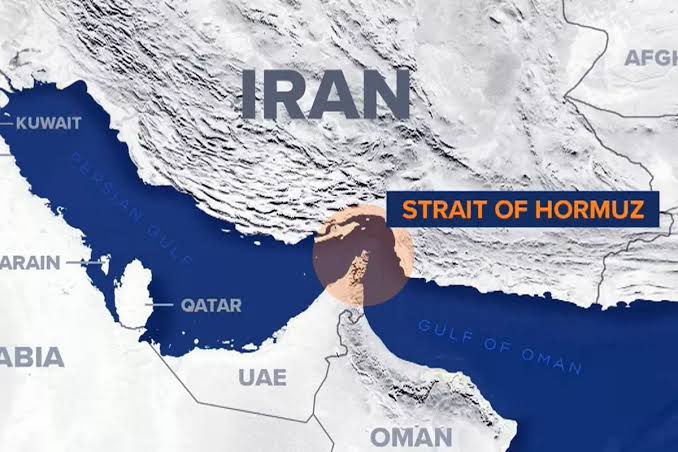
Trade projections are already under pressure as disruptions in the Strait threaten supply chains, especially in energy dependent economies across Asia and Europe.But the effects are not limited to fuel. Fertiliser production, chemical manufacturing, and even food systems are indirectly tied to energy flows from the Gulf.
A disruption in Hormuz is therefore not just an oil story. It is an economic chain reaction.
The Uneven Burden
Not all countries feel the impact equally. The global map of dependency is uneven. Asian economies, which receive the bulk of oil passing through the Strait, are among the most vulnerable.Meanwhile, countries with diversified energy sources or domestic production capacity experience a softer shock.
This imbalance creates another layer of geopolitical tension, where some nations absorb the crisis while others navigate it with relative stability.
For developing economies, the situation is even more delicate. Rising fuel prices translate directly into inflation, higher transport costs, and reduced purchasing power. What begins as a maritime issue becomes a household reality thousands of kilometres away.
A Chokepoint with Global Consequences
The Strait of Hormuz is often described as a chokepoint. But that word does not fully capture its weight. It is not just a narrow passage. It is a pressure valve for the global economy.
When it is stable, the world barely notices it. Oil flows. Ships move. Trade continues. But when it tightens, even slightly, the consequences are immediate and far reaching.
The current situation reveals a deeper truth. Global trade, despite its vast networks and technological advancement, still depends heavily on a few fragile routes. And among them, none is more critical than Hormuz.
The Bigger Picture
What we are witnessing is not just a regional conflict. It is a reminder of how interconnected the modern world has become. A decision, a threat, or a disruption in one narrow waterway can echo across financial markets, energy systems, and daily life worldwide.I
ran’s hold on the Strait is therefore not just a military or political issue. It is an economic lever with global reach. And as tensions persist, the world is forced to confront a difficult question.
Can global trade truly be secure when so much depends on a single, vulnerable passage?
That question, more than anything else, defines the Strait of Hormuz crisis today.
About The Author