


By Ayoola Faseyi | THE VENT REPUBLIC Media
Entering Yaba Left: First Impressions
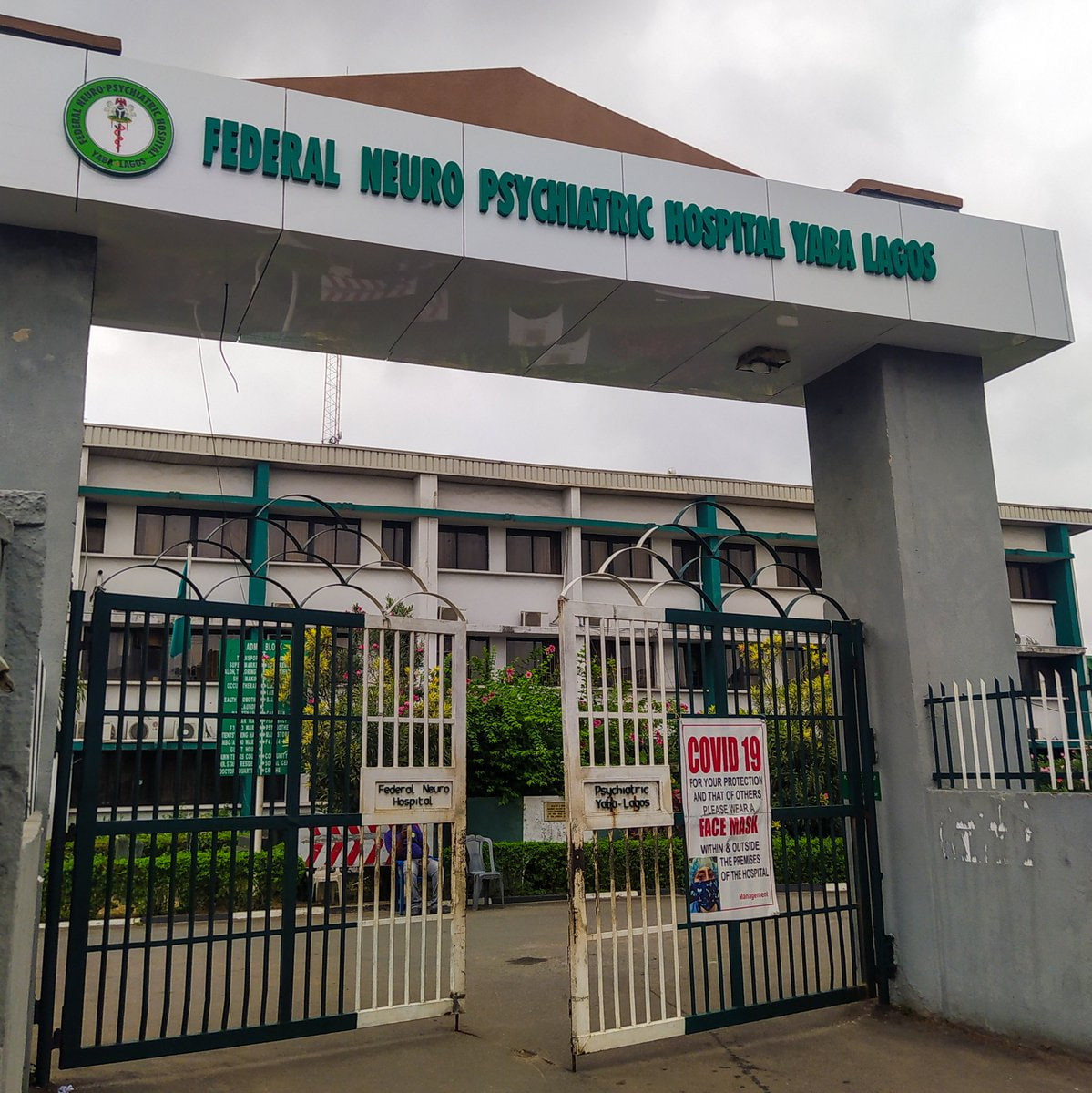
A reporter from THE VENT REPUBLIC MEDIA went undercover at the Federal Neuropsychiatric Hospital in Lagos, popularly known as “Yaba Left,” to interact with outpatients and examine how they are treated. The identities of the patients have been concealed due to the stigma they face.
A Morning Inside Yaba Left
It was a Thursday morning when I entered the front gate of the hospital, posing as an outpatient coming to see a psychiatrist. I arrived as early as 7 am to beat the rush, but to my amazement, a large crowd of people, young, middle-aged, and elderly, were already waiting. The gatekeeper’s whistle cut sharply through the humid Lagos air, and the scent of antiseptic mixed with the faint odor of overripe fruit from nearby street vendors.
The hall was packed with no space to stand, so I rested beside the entrance and observed with keen attention. Most of the patients appeared completely normal. Nothing about them suggested they were dealing with mental health challenges. Yet, fleeting moments of hesitation, subtle grimaces, and anxious eyes hinted at the hidden struggles carried silently by each patient.
Meeting Charles Obi: The Human Side of Mental Health
I soon stumbled on a young man, not more than 30, reading a newspaper and making negative remarks about the state of Nigeria. Our eyes met, and he smiled. The smile was disarming.
“My name is Charles Obi,” he said.
“I am Tope Williams,” I replied.
“I have been here since 6 am. I left Ikorodu by 3.30 am and these useless people have still not attended to us. I have lost my job twice because of this and I can’t afford to lose this one. What will I tell my newly married wife who is expecting our first child?”
“I am so sorry. Are things really bad here?” I asked, surprised that a patient could maintain a job and family.
“Are you kidding me? Don’t you know how things work here? You must be new to this place.”
“Yes I am,” I responded.
A loud voice suddenly interrupted.
“Good morning all! As usual, you pay five hundred naira for your doctor’s appointment. If you don’t have a complaint, you can just get your prescription and go upstairs to buy your drugs. There are very few doctors on duty today, so we have to be fast.”
Charles paid for his appointment, including a fine for not coming on his scheduled day. The sound of coins clinking against metal trays and the shuffle of files created a chaotic symphony echoing the frustration of every patient.
The Cost of Medication and the Weight of Stigma
When I asked about his medication, he replied:
“Haaaa! I spend about fifteen thousand naira monthly. HIV patients are lucky, their drugs are mostly free, but we have to bear the cost ourselves. And we take them for life.”
He explained how stigma forces patients to hide their condition from employers, making it difficult to attend appointments.
“I have relapsed once in my former place of work and it was most embarrassing.”
“I thought patients could be weaned off drugs after some time,” I said.
“It happens in rare cases, but hardly in Nigeria. Even if it does, you need one consistent doctor, a psychologist, and a psychotherapist. Here, we see different doctors and hardly see specialists. I have never seen one in twenty-five years of treatment.”
Long Lines, Few Doctors, and the Systemic Struggle
The hall stretched like a maze, with chairs lined up haphazardly and the murmur of patients’ conversations bouncing off pale walls.
“There are not up to two thousand psychiatrists for about twenty million patients. Many have left the country for greener pastures,” Charles said.
Earlier, while waiting, I noticed a tall, well-shaped woman in a soft British accent:
“Please, I need a favour. My drugs cost twenty thousand naira. I begged my doctor to reduce it, but he refused. I can’t afford to relapse. My fiancé left me the last time it happened, and I recently lost my job. Please, can you help me with anything?”
I stepped out, withdrew ten thousand naira, and gave it to her. She disappeared before I could ask her name. Her absence left a quiet ripple of empathy in the hall, a reminder of countless untold stories behind each patient.
Patients in Need: Stories of Survival and Resilience
“Tope!”
I turned to see Charles again.
“I have made friends with a doctor who gives me a sick leave report anytime it’s appointment day. One must beat the system. We must survive.”
After his injection, I asked how it went.
“Painful as usual, but I am used to it. There has been a bill before the National Assembly for years, the Orphan Bill. It is meant to protect us from discrimination, especially by employers, but it has been neglected. Under normal circumstances, this should be covered by HMO. Mental illness is not always due to drug abuse. It can be caused by grief, depression, or emotional challenges. There is need to stop the ignorant stereotyping.”
“Miracles do happen,” I said.
“Tragically, it may not happen in my lifetime,” he replied.
We exchanged contacts before parting ways.
Every glance, every whispered complaint, every anxious smile felt like a plea for recognition in a society that too often looks away.
Advocacy and the Road Ahead
I will use my platform to advocate for the passage of the Mental Health Bill and push for policies that will reduce the financial burden on patients, including access to free medication.
THE VENT REPUBLIC stands for equal opportunity and calls on the National Assembly to enact laws protecting vulnerable patients. They deserve love, not rejection. Their condition is not their fault, and it could happen to anyone.
Society must treat them with dignity and understanding. Mental health is not a shadow to hide; it is a reality to embrace.
First published in 2021 by The Vent Republic Media
Reworked and republished to reflect unchanged times in March 2026.
Copyright: The Vent Republic Media
About The Author






Very true. This is deep investigative journalism. With the increase in use of substances by the youths is disheartening . It will get to stage whereby the psychiatric hospitals would be overwhelmed completely.
You could imagine one cannot pay direct to a government account rather to consultant’s account. There is so much rot in virtually all sectors , no zeal to work on the part of the staff.
There should be a need on how to subsidize the cost of medication.
Mental health should be a serious issue on the front burner of National assembly . The need to legislate and protect the vulnerables .
More importantly , is to understand the type of mental disorders ranging from paranoid schizophrenia, bipolar disorder, OCD – Obsessive compulsive disorder , Manic disorder .
Mental health should be seriously dealt with , otherwise it’s a time bomb waiting to explode.
May God help us
Thank you for your submission.
We are honored to have you. We hope the government at all levels look into this.