

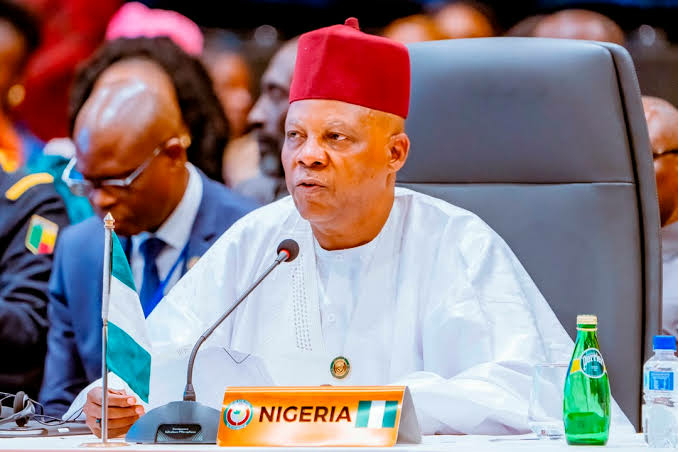
Vice-President Kashim Shettima has said Nigeria made significant sacrifices in support of South Africa’s liberation struggle, including deductions from the scholarship allowances of Nigerian students to fund anti-apartheid movements.
Shettima made the remarks in Sierra Leone during the 69th Ordinary Session of the ECOWAS Authority of Heads of State and Government while condemning the recent wave of xenophobic attacks targeting African migrants in South Africa.
Expressing solidarity with Ghana, the Vice-President called for the issue to be presented at the next African Union (AU) summit, stressing that attacks on fellow Africans were unacceptable.
“On the afrophobic attacks in South Africa, I wish to join Ghana in strongly condemning the attacks on its citizens and other fellow Africans in the Republic of South Africa,” he said.
He noted that the matter would be taken before the African Union to send a strong message against intolerance on the continent.
Shettima reminded South Africa of the support it received from several African nations during the anti-apartheid struggle, particularly from Nigeria and Ghana.
“While we tread the path of moderation, South Africa should be reminded that the freedom the country currently enjoys is due to the liberation efforts of African countries such as Nigeria and Ghana.
“Deductions were made from our scholarship allowances to fund liberation movements in Southern Africa.
“They should learn to know where their problem lies. Their problems do not lie with fellow Africans who are there to sell their skills,” he said.
Nigeria has continued to express concern over the xenophobic violence that erupted in South Africa in April, during which at least four Nigerians were reportedly killed.
Minister of Foreign Affairs, Bianca Odumegwu-Ojukwu, had earlier criticised the treatment of Nigerians in South Africa, saying the country had made enormous sacrifices to support South Africa’s struggle against apartheid.
According to her, Nigeria committed financial resources to the liberation movement, reserved educational opportunities for South African students, and mobilised nationwide demonstrations in solidarity with the anti-apartheid campaign.
She also noted that many Nigerians participated in protests against the apartheid regime, with some even facing arrest for their activism.
Following the attacks, the Federal Government evacuated 1,490 Nigerians from South Africa in seven batches after rights groups issued an unofficial June 30 deadline for migrants to leave the country.
While Nigeria has maintained that it prefers diplomatic engagement to resolve the issue, the government has also indicated that retaliatory measures remain an option if attacks on Nigerians persist.
About The Author