

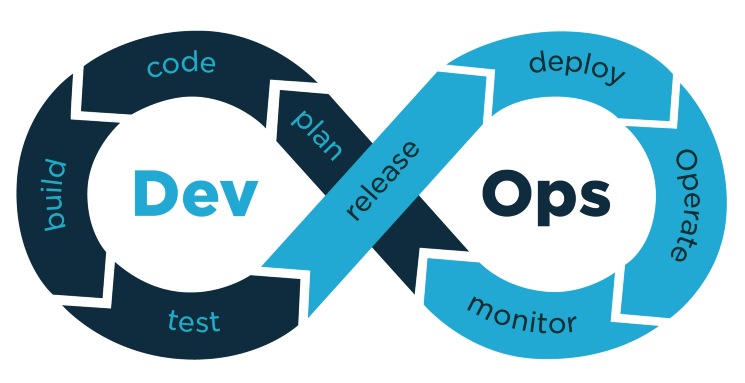
DevOps is a set of practices that combines software development (Dev) and IT operations (Ops) to shorten the development lifecycle and deliver high-quality software continuously. It emphasizes collaboration, automation, and integration between developers and operations teams to improve efficiency, reduce errors, and accelerate the release process.
What is Devops?
DevOps is a set of practices, cultural philosophies, and tools that combine software development (Dev) and IT operations (Ops). The primary goal of DevOps is to shorten the software development lifecycle while delivering features, fixes, and updates frequently, in close alignment with business objectives.
By fostering collaboration between development teams and operations teams, DevOps aims to improve the speed, quality, and reliability of software delivery.
Why DevOps Matters
Traditional software development and IT operations often work in silos, leading to delays, miscommunication, and inefficiencies. DevOps breaks down these barriers by promoting:
- Continuous Integration and Continuous Delivery (CI/CD): Automating the integration and deployment process.
- Improved Collaboration: Encouraging teamwork between developers and operations.
- Faster Time to Market: Enabling rapid release cycles.
- Higher Quality Software: Early detection of defects and better monitoring.
- Scalability and Reliability: Efficient handling of infrastructure and application performance.
Key Concepts to Understand
Before diving into DevOps, it’s essential to grasp some foundational concepts:
- Version Control Systems (VCS)
Tools like Git help manage code changes and enable collaboration. - Continuous Integration (CI)
Automating the process of merging code changes regularly and testing them. - Continuous Delivery/Deployment (CD)
Automating the release of code to production or staging environments. - Infrastructure as Code (IaC)
Managing infrastructure through code (e.g., Terraform, Ansible), making it reproducible and scalable. - Monitoring and Logging
Tools and practices to continuously monitor applications and infrastructure for issues. - Containerization and Orchestration
Using containers (like Docker) to package applications and orchestration tools (like Kubernetes) to manage them.
How to Start Learning DevOps from the Basics
1. Learn a Programming/Scripting Language
Start with languages commonly used in DevOps like Python, Bash, or PowerShell. They are essential for automation tasks.
2. Understand Linux Fundamentals
Most servers run on Linux, so basic command-line skills and understanding of Linux system administration are crucial.
3. Get Familiar with Version Control
Master Git, including branching, merging, and pull requests.
4. Explore CI/CD Tools
Learn tools like Jenkins, GitLab CI, CircleCI, or Travis CI. Try setting up a pipeline that builds and tests code automatically.
5. Study Infrastructure as Code
Practice with tools like Terraform or Ansible to automate infrastructure provisioning.
6. Learn Containerization
Understand Docker basics and try to containerize simple applications.
7. Dive into Orchestration
Explore Kubernetes to manage containerized applications at scale.
8. Understand Monitoring and Logging
Learn how to use tools like Prometheus, Grafana, ELK stack (Elasticsearch, Logstash, Kibana).
9. Practice Automation
Automate repetitive tasks related to deployment, testing, and infrastructure management.
10. Join the Community and Keep Learning
DevOps is evolving rapidly. Follow blogs, forums, attend webinars, and contribute to open-source projects.
What You Need to Have
- A Computer with Internet Access
To install tools and access cloud services. - Basic Knowledge of Software Development
Understanding how software is built and runs. - Curiosity and Willingness to Learn
DevOps covers a broad area, requiring continuous learning. - Cloud Account
Familiarity with cloud providers like AWS, Azure, or Google Cloud is valuable. - Access to Tools
Many DevOps tools are open source or offer free tiers.
Conclusion
DevOps is a transformative approach to software development and operations that improves collaboration, automation, and reliability. Starting with the basics—programming, Linux, version control, and CI/CD—provides a solid foundation. Gradually exploring infrastructure automation, containerization, and monitoring will deepen your expertise. With continuous learning and practice, you can master DevOps and contribute to building efficient, scalable, and resilient software systems.
About The Author